Last updated on: February 2, 2026
Table of Contents
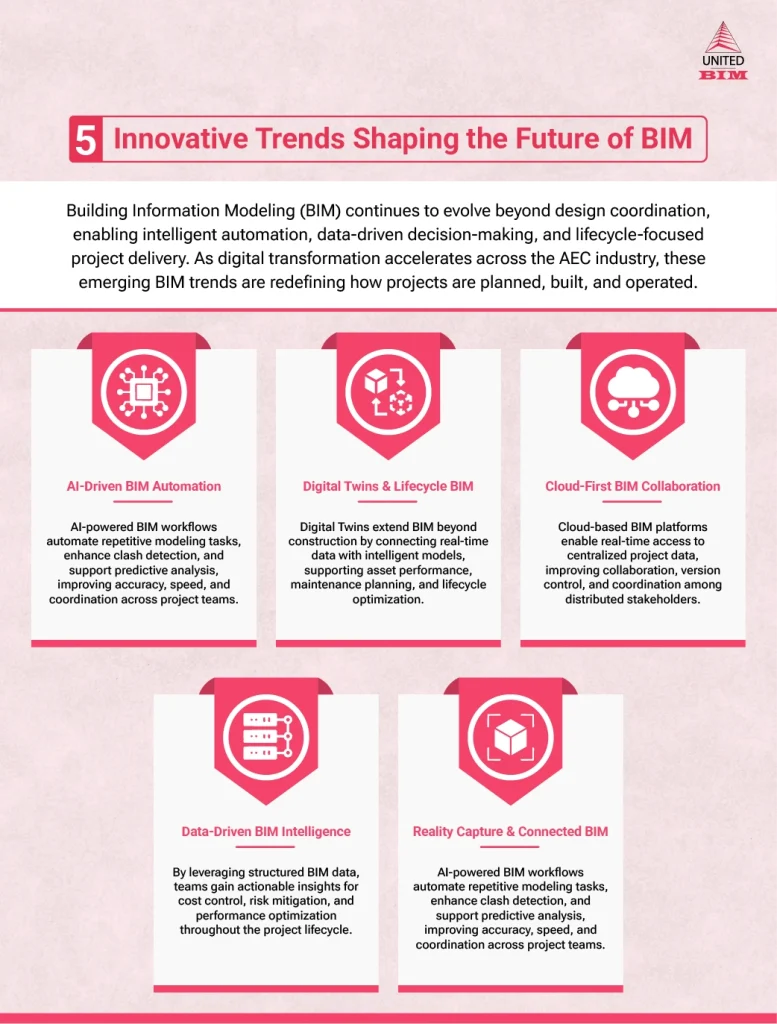
Building Information Modeling (BIM) has evolved far beyond a design and coordination tool. In 2026, BIM sits at the center of how AEC projects are planned, delivered, and operated. What began as a way to visualize buildings in 3D has now matured into a data-driven, lifecycle-oriented process that supports smarter decisions across design, construction, and facilities management.
Industry studies continue to show that organizations deeply engaged with BIM achieve higher ROI, better risk control, and improved collaboration outcomes. The difference today is that BIM is no longer optional or experimental. It is becoming a baseline expectation across projects, driven by client mandates, digital delivery requirements, and the growing need for accuracy and predictability.
Below, we explore the most relevant BIM trends shaping the AEC industry in 2026 and how they are influencing real-world project delivery.
BIM Trends in 2026 for AEC Industry
The BIM ecosystem continues to evolve in response to project complexity, tighter schedules, and increasing performance expectations. The following trends reflect where BIM is delivering the highest value today.
01.
AI-Enabled BIM and Automation
Artificial Intelligence (AI) has become a practical and high-impact extension of BIM workflows in 2026, moving beyond promise to everyday use. AI-driven tools now automate repetitive tasks such as clash detection and model validation, allowing teams to identify coordination issues early and with greater precision than traditional rule-based checks. Studies show that AI-powered clash detection models can significantly improve accuracy and reduce manual review time by filtering irrelevant conflicts and prioritizing issues that matter most in construction coordination.
By 2026, aboutt 27% of AEC firms globally are actively using AI technologies for automation and decision-making in their project processes, with that figure continuing to rise as data maturity improves.
Beyond clashes, AI enhances model quality and consistency by learning from project data to classify elements automatically, highlight missing information, and surface constructability risks before they become costly on-site problems. Rather than replacing human judgment, AI enables BIM professionals to focus on higher-value decisions such as design optimization, scenario testing, and proactive risk mitigation, making project delivery faster and more reliable.
According to a report 87% of Contractors Believe AI Will Meaningfully Transform Their Business
To read more on this, read our other blog: AI in BIM
02.
Digital Twins and Lifecycle BIM
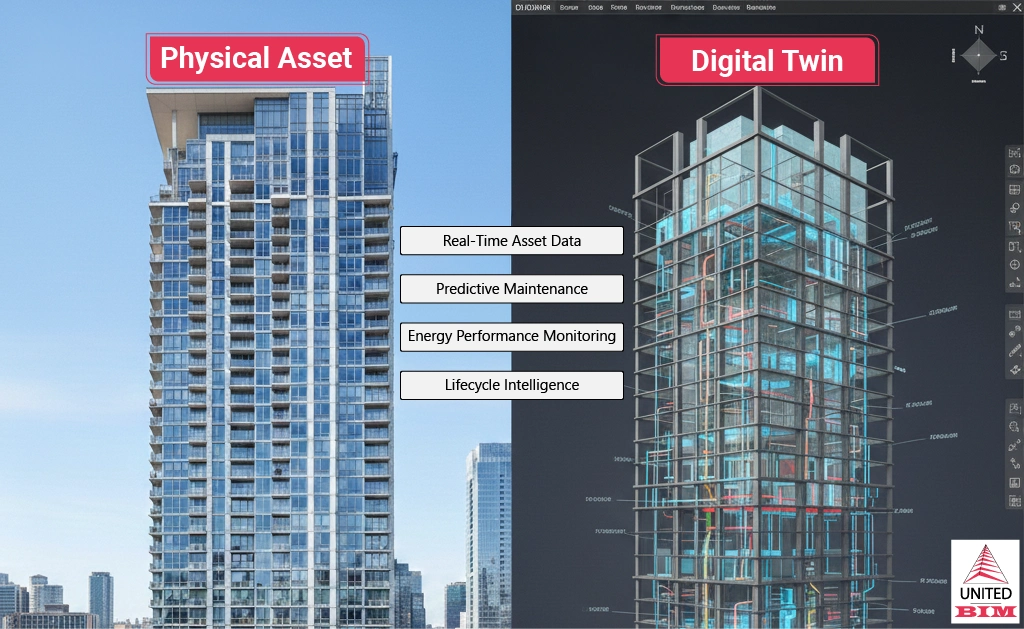
Digital twins are emerging as the next major evolution of BIM in 2026. While they have already been used on select projects, adoption is steadily increasing as project teams and owners recognize their long term value. Unlike traditional BIM models that often become static after handover, digital twins extend BIM into real time operational use across the entire asset lifecycle.
A digital twin is a living digital representation of a physical asset that integrates sensor data, building systems, and performance metrics. This allows teams to monitor actual performance, run simulations, and make data driven decisions throughout operations.
Recent industry surveys show that around 52% of AEC leaders are implementing digital twins, with adoption rising to nearly 67% among owners and facility managers focused on operational efficiency.
Read more about Digital Twins in Construction.
Digital twins enable predictive maintenance, energy optimization, and ongoing performance analysis that static BIM models cannot deliver alone. By connecting design intent with real world behavior, they transform BIM from a project delivery tool into a continuous operational platform. As confidence in their return on investment grows, digital twins are becoming an increasingly important part of how the industry plans, operates, and optimizes built assets over time.
If you want to look at the complete report on Digital Twins and its adoption in the construction industry, click here.
03.
Cloud-First BIM Collaboration
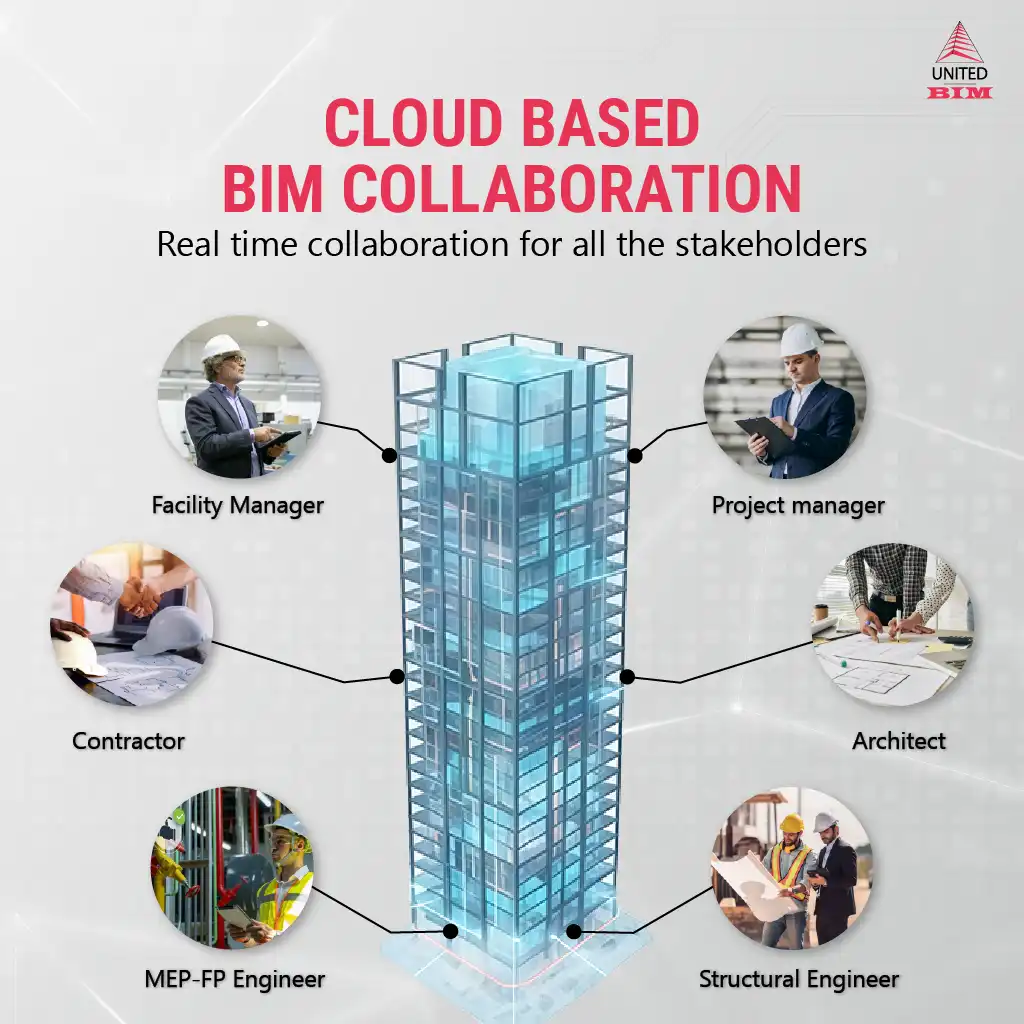
Cloud-based BIM collaboration has shifted from optional convenience to a de facto industry standard in 2026. Cloud platforms now enable real-time access, shared models, and centralized data across distributed teams, which significantly improves coordination, reduces version conflicts, and accelerates issue resolution across disciplines- capabilities that were difficult or impossible with traditional file-based workflows.
Cloud-based BIM tools eliminate bottlenecks caused by local storage and disconnected email exchanges, enabling teams to work together on the latest information at every stage of the project.
While adoption rates vary by region and firm size, cloud BIM usage is rapidly rising as part of broader digital transformation trends in AEC. In particular, cloud-enabled model access and collaboration capabilities are frequently highlighted as key reasons why BIM has moved from being a design tool to an integrated project delivery platform across design, construction, and operations.
04.
Data-Driven BIM: 4D, 5D, and Beyond
Modern BIM is increasingly focused on data, not just geometry. In 2026, 4D and 5D BIM have become integral to project planning and control.
- 4D BIM links models with schedules to simulate construction sequencing
- 5D BIM integrates cost data to improve budgeting, forecasting, and cost control
According to industry research, projects that adopt 4D and 5D BIM workflows report up to 20–30% improvements in schedule reliability and cost predictability compared with traditional planning methods, driven by better scenario analysis and risk insight.
How data-driven scheduling improved construction planning for a school reconstruction project.
Read our 4D BIM construction scheduling and simulation case study to see how time-based modeling helped visualize sequencing, reduce risks, and support better project decisions.
These dimensions allow project teams to evaluate scenarios, identify risks, and make informed decisions before issues arise on site. Data-driven BIM supports better predictability and helps stakeholders align design intent with time and cost constraints.
05.
Reality Capture Integration: Drones, Laser Scanning, and IoT
As BIM becomes more data-driven and decision-critical, keeping models aligned with real-world conditions is essential.
Reality capture technologies such as laser scanning, drones, and photogrammetry are routinely integrated into BIM workflows to validate design intent, track progress, and generate accurate as-built models. This continuous validation helps reduce discrepancies between planned and actual conditions, especially on fast-tracked and complex projects.
This integration enables:
- Faster and safer site surveys
- Accurate progress tracking against BIM models
- Improved as-built documentation
- Better validation of design assumptions
By combining reality capture with BIM, teams can maintain alignment between design models and on-site conditions throughout the project lifecycle.
From Site to BIM, Accurately
See how reality capture and Scan-to-BIM workflows help create reliable as-built models and keep BIM aligned with on-site conditions.
While the trends discussed above are already shaping mainstream BIM workflows in 2026, there is one additional trend gaining rapid traction across specific project types- BIM for prefabrication and modular construction.
06.
BIM for Prefabrication and Modular Construction
Driven by labor shortages, schedule pressures, and the demand for higher quality control, more project teams are using BIM models to support off-site fabrication and modular delivery strategies. BIM provides the level of precision required to design, coordinate, and manufacture building components in controlled environments before they arrive on site.
Projects using BIM-enabled prefabrication can reduce construction time by 20–50% and significantly lower material waste. As modular construction expands in sectors such as education, healthcare, residential, and data centers, BIM’s role in enabling prefabrication workflows is becoming increasingly critical.
Want to explore this further?
Learn how BIM supports prefabrication workflows, improves coordination, and enables fabrication-ready models in real construction projects.
Benefits of BIM Collaboration for AEC Stakeholders
As BIM adoption has matured, its collaborative value has become clearer across all stakeholder groups. Architects, engineers, contractors, and owners now rely on shared BIM environments to reduce silos and align decisions early.
This research study concludes that the majority of professionals enlist the below-mentioned benefits of BIM collaboration:
| Benefits of BIM Collaboration | Architects | Engineers | General Contractors | Trade Contractors |
|---|---|---|---|---|
| Better client understanding of proposed design | 92% | 57% | 92% | 75% |
| Improved client team design relationship | 92% | 43% | 85% | 50% |
| Improved overall design solution | 92% | 43% | 85% | 50% |
| Faster decision making | 75%% | 43% | 85% | 50% |
| Fewer design changes during the process | 58% | 43% | 54% | 75% |
Source: SmartMarket Brief- Leading the Future of Building Connecting Teams
Now, collaboration is no longer just about sharing models. It is about sharing accurate data, maintaining version control, and ensuring that everyone works from a single source of truth.
How BIM Technology Is Shaping the Future of the AEC Industry
BIM is steadily becoming the foundation of digital delivery in construction. Governments, public agencies, and private clients are increasingly mandating BIM standards and structured data deliverables.
The future of BIM is defined by integration. Design data, construction information, cost, schedule, and operational data are converging into connected digital ecosystems. This shift is helping the AEC industry move away from fragmented workflows toward more predictable, transparent, and efficient project delivery.
As BIM adoption deepens, firms that invest in skills, standards, and advanced workflows will be better positioned to meet client expectations and compete in an increasingly digital market.
Wrapping Up
In 2026, BIM is no longer just a technology trend. It is a strategic capability that shapes how projects are conceived, delivered, and operated.
At United BIM, we continuously track emerging technologies and evolving industry practices to help our clients stay ahead. Our experience across diverse project types allows us to apply BIM in practical, outcome-driven ways that support collaboration, accuracy, and long-term value.
If you are looking to understand how modern BIM practices can support your next project or help you adapt to changing industry requirements, our team is ready to assist.
Let’s bring your vision to life—contact us to get started.
The future of BIM lies in its role as a data-driven delivery framework rather than just a design tool. BIM is increasingly used to support lifecycle decision-making, from early planning and construction through operations and facility management, with stronger integration of AI, cloud platforms, and real-time data.
Key BIM trends in 2026 include AI-enabled automation, digital twins for lifecycle management, cloud-first BIM collaboration, data-driven 4D and 5D planning, and reality capture for continuous model validation. Together, these trends focus on improving accuracy, predictability, and long-term asset value.
AI is being used to automate repetitive BIM tasks, improve model quality, and identify coordination or constructability issues earlier in the project lifecycle. Rather than replacing professionals, AI supports better decision-making by reducing manual effort and improving consistency across models.
Digital twins extend BIM models beyond construction by connecting them with operational data from building systems and sensors. This allows owners and facility managers to monitor performance, plan maintenance proactively, and make informed decisions throughout the asset’s lifecycle.
Through 4D and 5D BIM, project teams can link models with schedule and cost data to simulate construction sequencing, test scenarios, and identify risks early. This data-driven approach improves predictability, reduces rework, and helps align design intent with time and budget constraints.
About the Author

Coordination Manager / VDC Manager at United BIM
With over 10 years of experience in the AEC industry, Akash Patel is a seasoned Coordination Manager and VDC Manager at United BIM. His expertise lies in managing complex MEP-FP coordination projects and leveraging cutting-edge BIM technology to ensure seamless collaboration and precision. Akash is dedicated to delivering high-quality, detailed models that meet the demands of modern construction. He is passionate about optimizing workflows and driving innovation within the BIM field.