Last updated on: December 5, 2025
Table of Contents
Engineering design involves a lot of teamwork to get a project done right. For a construction design project, you have architects, engineers, contractors, suppliers, and other experts who all handle different aspects of the project. This collaboration makes things complex and can be challenging.With multiple disciplines working on different timelines and using different design tools, it becomes difficult to ensure that every element fits together perfectly.
And as construction projects grow more complex and timelines get tighter, AEC teams cannot afford design conflicts that surface late in the field.
This is where clash detection in BIM becomes a game changer. By identifying conflicts early in a coordinated 3D environment, teams can eliminate design errors before they reach construction. This reduces rework, saves cost, improves communication and ensures that all disciplines are working toward the same coordinated model.
With this guide, we aim to simplify the concept of clash detection and help AEC professionals understand how it works, why it matters and how it prevents the real-world challenges that slow projects down.
What is BIM Clash Detection?
What is BIM Clash Detection?
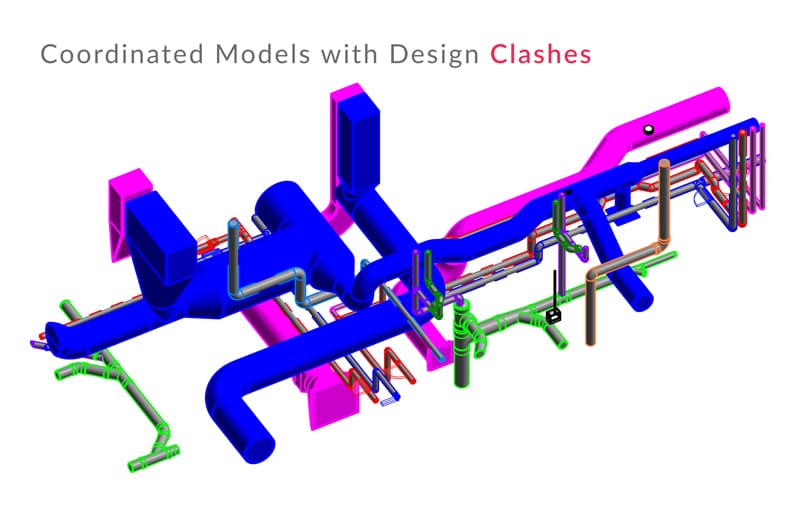
BIM clash detection is the process of identifying conflicts between building components in a 3D model before construction begins. These conflicts are usually the result of different disciplines working in isolation. For example, an MEP layout may interfere with a structural beam, or an architectural wall may cut through a mechanical duct route. When these issues are not caught early, they turn into costly rework and on-site delays.
Clash detection brings all models together in a single federated environment so every discipline can be reviewed as one coordinated system. Software tools like Navisworks, Revit and Solibri run automated checks to highlight hard clashes, clearance issues and workflow-related conflicts. This allows AEC teams to resolve design errors virtually instead of discovering them during installation.
Now that we understand what BIM clash detection is, the next step is to recognize the different types of conflicts that can occur in a coordinated model.
Types of Clashes
A conflict occurs when the elements of different MEPFP or other trades occupy the same space. This conflict can be geometrical (for example, HVAC crossing through structural beam), schedule-based (when the sequence of work is not as per the schedule or multiple things take place at once), or the changes are not updated in the drawings.
There are primarily 3 types of clashes:
A hard clash occurs when two components of a building intersect or pass through each other.
Autodesk’s Navisworks is a BIM clash detection tool that identifies and resolves the hard clashes based on the geometric and rule-based algorithms embedded in the building design components.
Soft Clash occurs when one element is not given the spatial or geometric tolerance and because of which its buffer zone is breached. It is a type of clash which gets flagged when a distance of less than a set tolerance is detected.
Workflow clashes, as the name suggests, are the timeline conflicts. They actually represent a mismatch in the scheduling of contractors or when there is a conflict of timeline with equipment or material delivery. It is knowns as 4D clash as it results from scheduling clashes that affect the efficiency of the entire construction firm.
It can bring construction activity on standstill as when one schedule gets interrupted it has a cascading effect on several other disciplines.
What are the Benefits of Clash Detection?
BIM technology and clash detection have collectively made it easier for designers and architects to create sophisticated building designs without worrying about the quality of construction documents. Owing to the advanced nature of clash detection & BIM software suites, a change made to a single element is reflected in all the views, automatically. Also, as everything is coordinated, knowledge transfer is seamless, reducing manual efforts and enhancing efficiencies
When everything is planned, visualized and managed with BIM during the design stage itself, it leads to fewer changes during the construction phase. As everything is collated in the form of a 3D model, identifying conflicts becomes easier at initial stages, enabling teams to coordinate for resolving issues without conflict.
Digitized clash detection workflow makes it easier for teams to share and collaborate on the same project. BIM & clash detection with Navisworks ensures prompt knowledge transfer for streamlined coordination between members of different design, construction, electrical, and engineering disciplines. The review and markup capabilities with a real-time reflection into all the visuals make the construction process faster, better, and more efficient, without room for error due to negligence.
Modern BIM toolkit automates multi-element clash detection. As BIM enables architects and engineers to model everything in advance, on-site conflicts are minimized as all the elements perfectly fit into each other despite being manufactured off-site.
Without a central BIM modeling strategy in place, it is quite hard for a building designer/architect to get a universal view of a project. With hundreds of totally unconnected documents, it becomes hard for the design team to visualize and pepper the right amount of creativity for the success of the project. BIM clash detection provides a greater level of transparency and an effective means to collaborate with other project stakeholders.
Get clash free reports for your design and construction project. Contact us with your requirements
When does BIM Clash detection Comes into the picture?
Architects, Structural engineers, MEP engineers (HVAC, Electrical and Plumbing), Environmental engineers and other professionals create design models, independent from each other. Once all the models are integrated into the BIM modeling process, clash detection comes into the picture.
Know more about our Clash Detection and Clash Report Generation Services.
How Does Clash Detection Actually Work in BIM
Understanding clash detection becomes much easier when you look at how it actually happens during a project. It is not complicated. It is simply a step-by-step process that helps teams identify and fix design conflicts before construction starts.
01
Each team creates its own model. When all these models are combined into a single 3D view, everyone can finally see how architectural, structural and MEP systems fit together. This is where clashes usually become visible.
02
Before running the clash test, the BIM team decides what needs to be checked against what. They also set tolerance limits so the software only flags real clashes instead of minor and acceptable overlaps.
03
Clash detection tools like Navisworks, Solibri or Revit scan the federated model and highlight every point where two elements interfere. It is fast, accurate and way more reliable than manual checking.
04
The software generates an easy to understand report that lists all detected clashes with their locations. The BIM coordinator then prioritises them and assigns each clash to the right discipline.
05
Teams discuss the issues, update their designs and re-upload the revised models. If clashes still exist, the test is run again. This loop continues until everything aligns perfectly.
06
Once the model becomes clash free, the project gets a green light for construction. With a coordinated design in place, site execution becomes smoother, faster and far more cost effective.
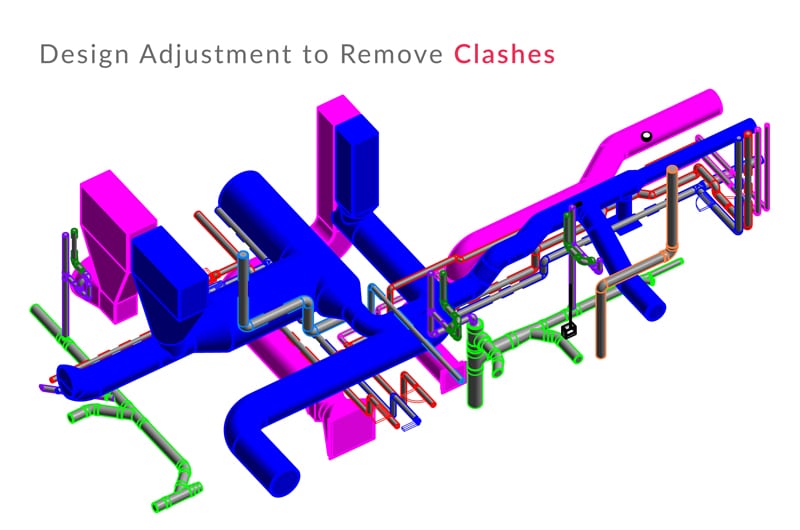
How BIM Can Make Clash Detection Efficient?
BIM and clash detection go hand in hand. Without Revit clash detection at the design stage with the help of integrated models, completing projects in this era is next to impossible. Clashes and interference can lead to losses, delays, and other problems during the construction stage and even lead to a total design failure in terms of compliance.
Even when a building design is compliant, design issues can lead to unprecedented losses. With BIM clash detection and coordination, building designs can become more efficient and functional. Clash reports give architects the power to identify duplicate instances of clashes and rectify clashes during the final design review.
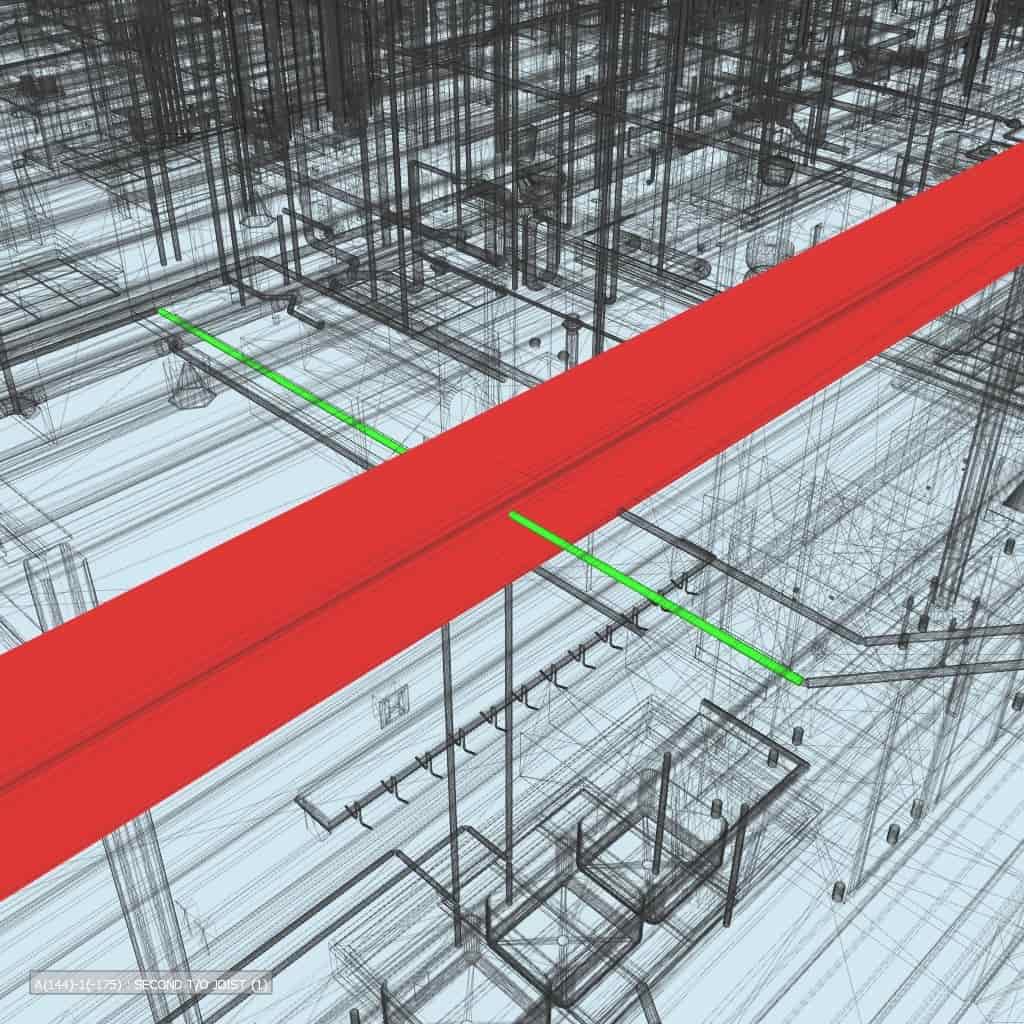
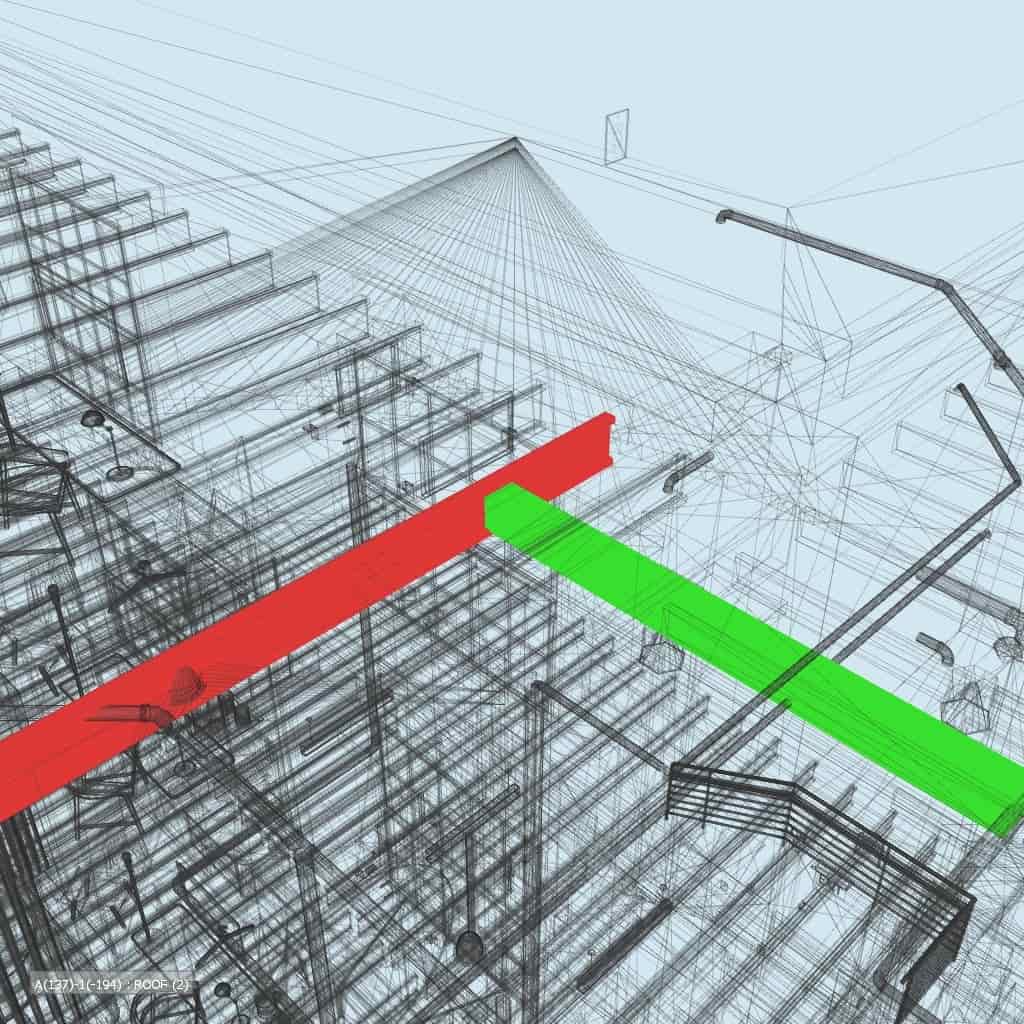
If you’d like to explore clash detection specifically in Navisworks, we’ve covered it in a separate blog. Read the blog here: Clash detection using Navisworks
Popular BIM Tools for Clash Detection
Clash detection becomes much easier when the right tools are in place. Today’s BIM software automatically scans models, pinpoints clashes and helps teams resolve them quickly. Here are some commonly used tools in the industry.
 Navisworks
A favorite for coordination. It combines all models, runs automated clash checks and generates clear clash reports for smooth collaboration.
 Revit
RevitGreat for early stage clash checks during design. It helps teams fix basic issues before models move into detailed coordination.
 Solibri
Used in complex commercial projects. It checks for clashes along with design quality, modeling accuracy and compliance.
 Revizto and BIM Track
These platforms keep clash communication and issue tracking organized, helping teams stay aligned throughout the project.
Generate multidisciplinary clash report for your design and construction project. Contact us with your requirements
The Future of BIM Clash Detection and Where the Industry Is Heading
Clash detection has already transformed coordination for AEC teams, but the real shift is still ahead. The way BIM tools are evolving suggests that clash detection will soon move from being reactive to predictive.
The biggest change will be real-time collaboration on a single live model instead of merging separate discipline models. When architects, structural teams and MEP engineers work in the same shared environment, clashes will be detected the moment a conflicting element is placed. This alone can eliminate a huge percentage of rework and delays.
Artificial intelligence is also becoming a key driver. Instead of only pointing out conflicts after they happen, future BIM tools will be able to predict where clashes are likely to occur based on patterns and design logic. Digital twins and site feedback will further tighten this loop by comparing on-site conditions with the BIM model and catching issues before they turn into problems.
Cloud-based coordination platforms will continue to play a major role. The more teams collaborate on the cloud, the faster clash resolutions become and the less coordination time is wasted.
In simple terms, the future of clash detection looks like this:
early warnings instead of late discoveries, real-time coordination instead of fragmented communication and fewer surprises on-site.
Conclusion
BIM Clash detection has revolutionized the engineering design domain, holistically. By giving everyone the power to visualize, analyze and eliminate clashes in advance, the technology is serving as much needed a lifeline for an industry stressed with thousands of issues.
At the same time, BIM and clash detection has made the lives of architects simpler by empowering them to control and supervise various elements without having to compromise on ingenuity at the last minute for project completion.
If you are thinking why MEP coordination is so much important in a construction project, read this article about MEP Coordination- Everything You Need to Know | Importance & Benefits. If you are planning to implement BIM in your latest project, feel free to Contact Us. We would be happy to help.
Clash detection in BIM is the process of identifying conflicts between building components in a 3D model before construction begins. It helps prevent design errors, rework and on-site delays.
It ensures smooth coordination among architectural, structural and MEP teams. By resolving clashes during the design stage, projects save time, reduce costs and stay closer to planned timelines
Navisworks is the most widely used software for clash detection, followed by Solibri, Revit, BIM Track and Revizto depending on project size and collaboration needs.
The main types are hard clashes (physical conflicts), soft clashes (clearance or tolerance violations) and workflow/4D clashes (schedule conflicts between trades or activities).
Clash detection should start during the design phase and continue throughout coordination until the BIM model becomes fully clash-free and ready for construction.
About the Author

Nirav Shah is a seasoned marketing leader with over 20 years of global B2B experience across the high-tech, IT, and AEC industries. He specializes in project management, digital marketing, brand positioning, and sales enablement. Until March 2024, Nirav led marketing initiatives aimed at delivering client-centric solutions while driving operational excellence. Known for his disciplined execution and ability to build and motivate high-performing teams, Nirav is a lifelong learner, dedicated to continuous improvement.