Electrical Coordination Services in USA
Unresolved clashes between electrical systems and other building disciplines are among the most disruptive and avoidable causes of project delays. By the time they surface on site, the cost in rework, schedule compression, and subcontractor disputes far exceeds what it would have taken to resolve them in the model.
At United-BIM, we deliver fully coordinated electrical BIM models that hold up under the scrutiny of multi-discipline coordination and the demands of real construction. Our work is rooted in technical depth, disciplined process, and close collaboration with the electrical designers and subcontractors who carry the most at stake.
FILL OUT THE FORM AND WE'LL BE IN TOUCH SOON!
Our Electrical BIM Coordination Services
We build or receive your electrical model and integrate it with the full project model across mechanical, plumbing, structural, and architectural disciplines. Every component is modeled at the level of detail your project demands and positioned with full coordination intent.
Using Navisworks, we run structured multi-pass clash detection across all electrical trades. Both hard clashes (physical conflicts) and soft clashes (clearance and code-separation violations) are identified and documented in a prioritised, actionable report, not a raw data export.
We attend gatekeeper meetings, virtual coordination sessions, and on-site walkthroughs as engaged participants. We advocate for the electrical scope in those conversations, flag when proposed resolutions create downstream problems, and ensure every decision is captured and implemented before the next coordination cycle.
Every coordination decision gets written back into the electrical model. We manage all necessary design modifications, coordinate with discipline leads where changes carry cross-system implications, and deliver a finalised, fully integrated construction model that reflects the complete coordination record.
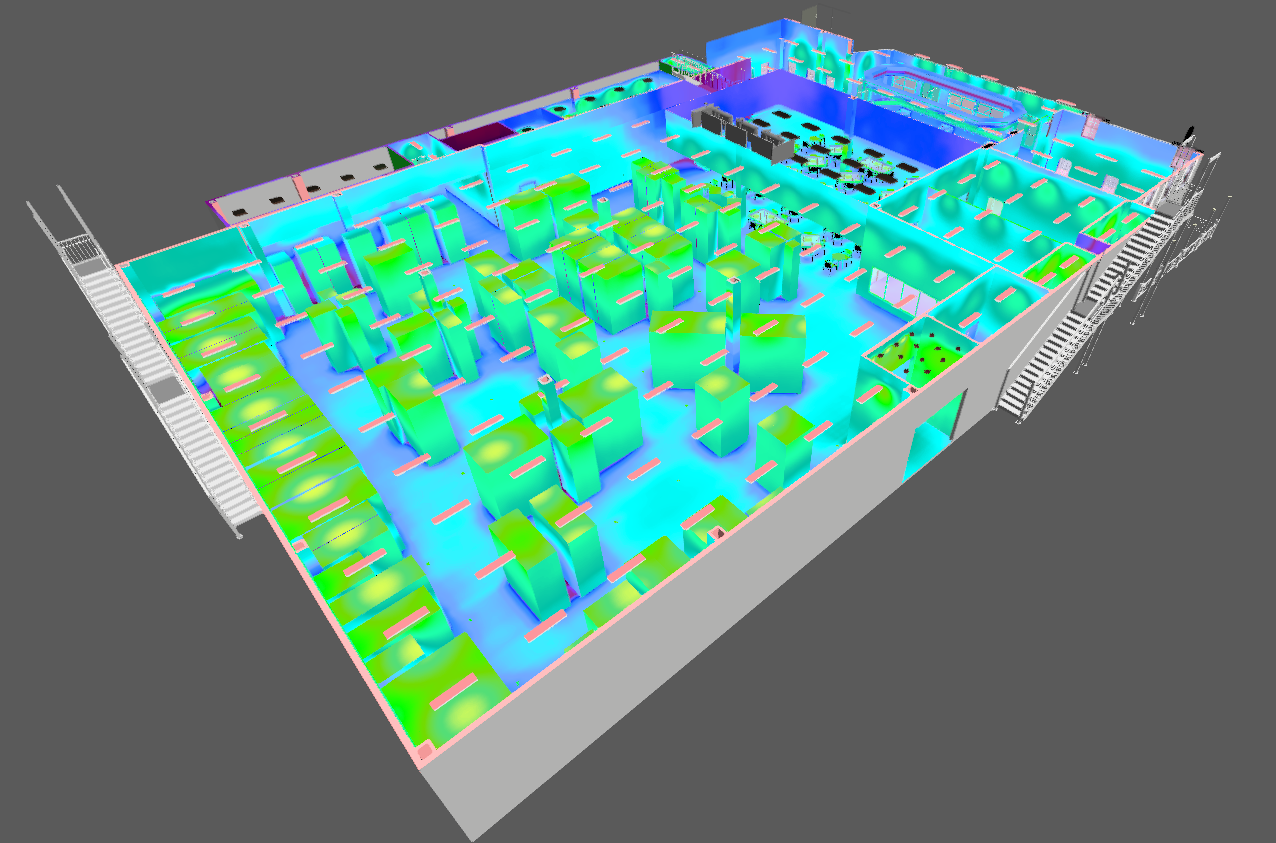
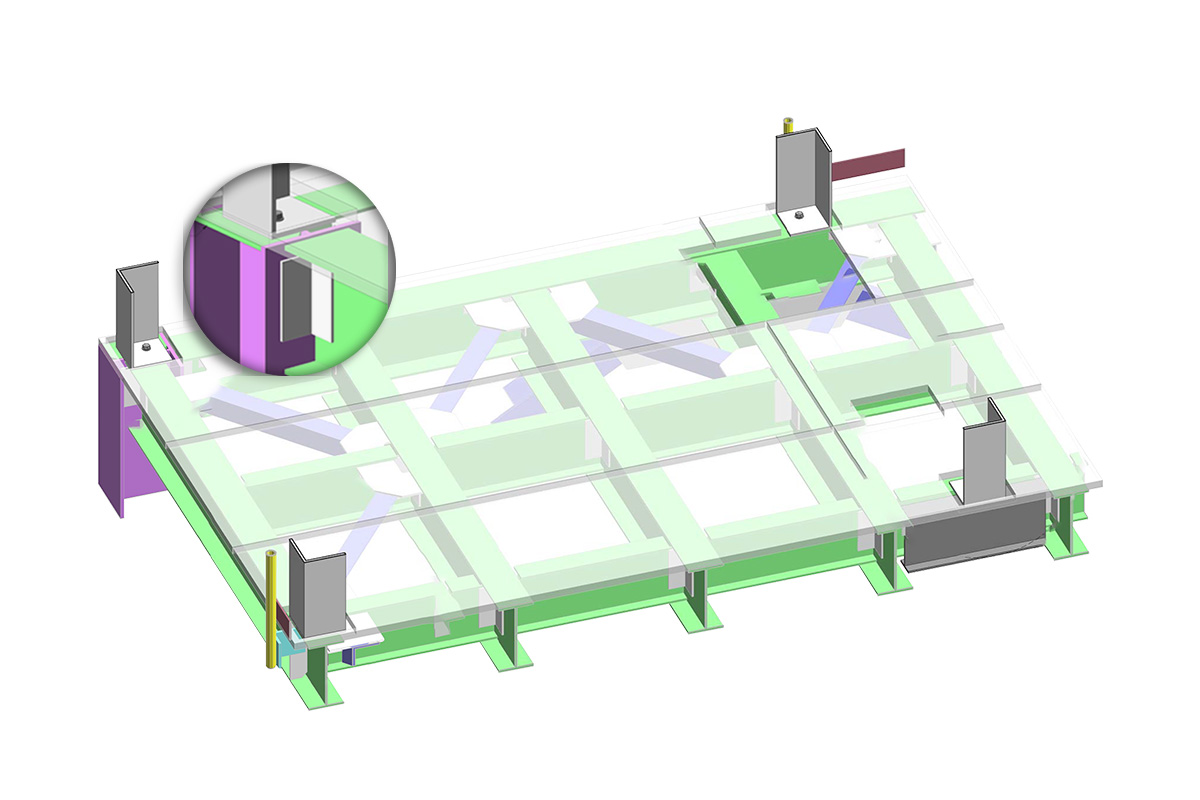
Read Case Study - LOD 400 Modeling, Electrical Coordination, and Clash Detection Services
Electrical Trade Coordination with Structural Trade for Installation of a New Emergency Generator at the International Airport
- Project name: Our Goal was to Coordinate the Electrical Equipment and Components with the Steel Structural Components.
- CLIEN : An Integrated Architecture, Engineering and Construction Firm
- INDUSTRY: A/E/C - Architecture/Engineering/Construction
- SERVICES: Electrical LOD 400 Modeling, Clash Detection and Coordination
- TOOLS: Navisworks, Revit, and AutoCAD
Electrical System Trades We Coordinate
Our coordination scope covers the full breadth of electrical system trades, each resolved against all intersecting MEP, structural, and architectural elements:
Each trade is coordinated not only internally but against every intersecting element across all linked disciplines, ensuring the routing logic is sound, the installation sequence is buildable, and no trade walks onto site to find a conflict that should have been resolved months earlier.
Our Electrical Coordination Process
01
Load Electrical BIM Template
We configure a project-specific BIM template calibrated to your client’s standards, covering naming conventions, system family types, component classifications, and all project parameters across electrical trades. Getting this right from the outset prevents model inconsistencies that accumulate into significant rework later in the coordination cycle.
02
Verify the Architectural Base Model
Before any discipline linking occurs, we verify coordinate alignment between the architectural base model and the electrical model using an Origin-to-Origin positioning methodology. Models linked without this verification produce compounding spatial errors that corrupt every clash detection test that follows.
03
Prepare and Populate the Electrical Model
With the template configured and coordinates verified, we build or refine the electrical model within the central file. All components are placed and routed with coordination intent, positioned with awareness of intersecting disciplines, critical clearance envelopes, and the zones where conflicts are most likely to emerge.
04
Execute Multi-Pass Clash Detection
In Navisworks, the electrical model is tested against all linked discipline models in a structured sequence of clash detection passes. A single run surfaces the obvious conflicts. Multiple passes, each informed by the resolutions from the previous cycle, uncover subtler clearance violations and secondary clashes that single-pass coordination routinely misses.
05
Review, Resolve and Verify
Clashes are reviewed with the project team and resolved through a documented process. After each cycle, the model is reloaded in Navisworks and verified: resolved clashes are confirmed clear, and the model is checked for any new conflicts introduced by the changes. This loop continues until the model is fully clean across all discipline intersections.
Download a printable A2 size info-graphic of construction coordination workflow – MEP Focus, LOD Info., Inputs & Outputs at each phase of building design.

Download a printable A2 size info-graphic of MEPFP Dashboard that can be used as a reference material to create a one for MEP Gatekeeper meeting.
Electrical Coordination & Clash Detection Reports
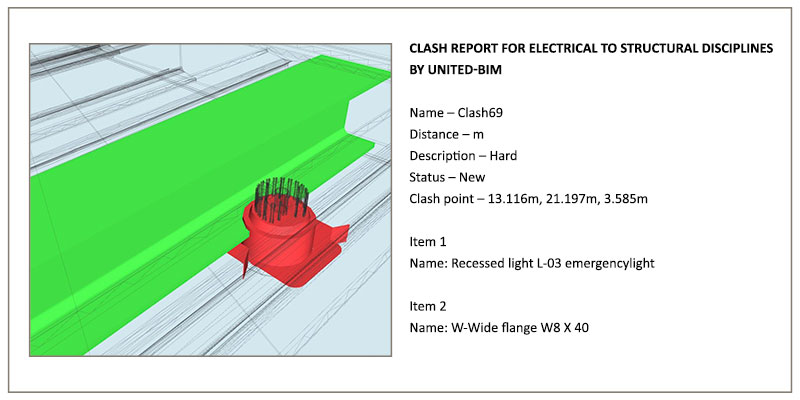
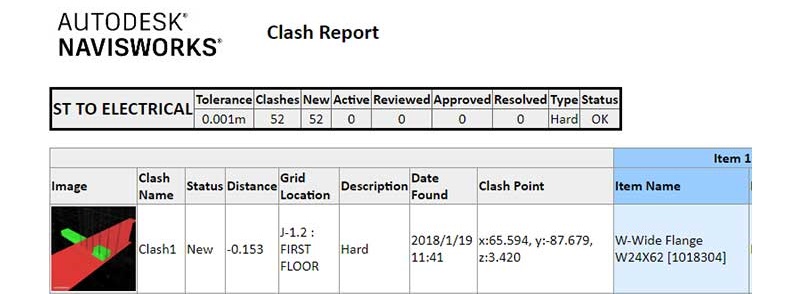
Electrical to Structural Discipline
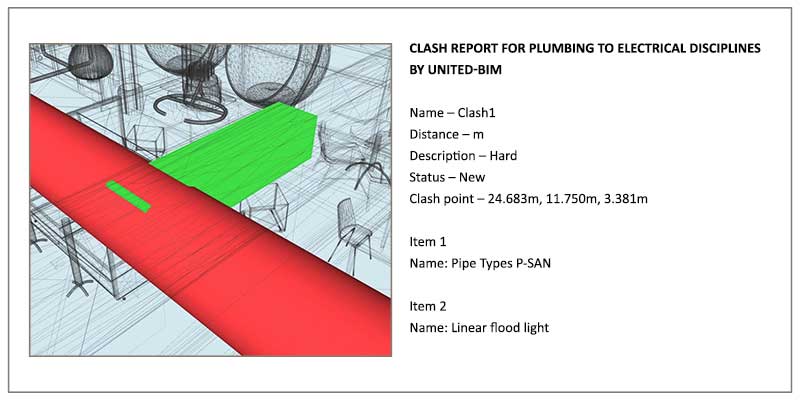
Electrical to Plumbing Discipline
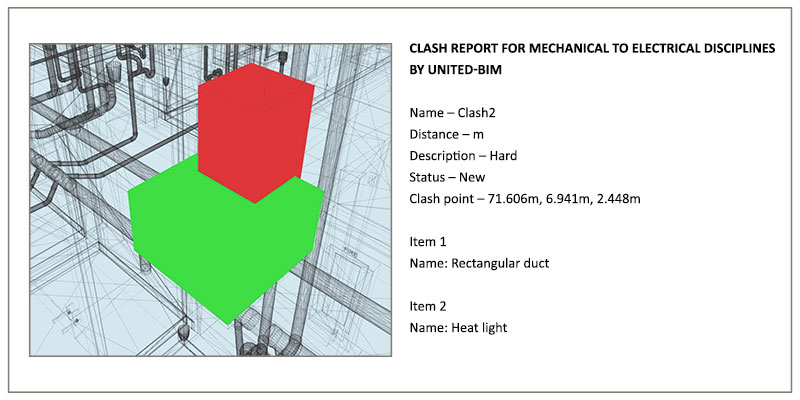
Electrical to Mechanical Discipline
USA

Providing BIM Services with Quality, Speed, and a Consultative Approach
Electrical coordination should ideally begin during the design development or preconstruction stage. Early coordination allows routing validation, ceiling space planning, and clash detection before drawings are finalized or materials are procured.
No. While complex commercial and industrial projects benefit significantly from coordination, even mid-sized projects with tight ceiling spaces or dense MEP systems can experience costly issues without proper electrical integration.
By identifying and resolving clashes before installation, electrical coordination reduces field rework, labor overruns, RFIs, and material waste. Early conflict resolution typically results in significant schedule and cost protection.
Electrical coordination is typically performed at LOD 300 to LOD 400, depending on project requirements. LOD 300 supports spatial coordination, while LOD 400 aligns more closely with fabrication and installation-level detail.