Last updated on: May 18, 2026
Table of Contents
In construction and architecture, projects do not move from an idea directly into construction. They pass through different design stages, and each stage adds more clarity, detail, and documentation.
Three common terms used in this process are SD, DD, and CD.
- SD means Schematic Design.
- DD means Design Development.
- CD means Construction Documents.
Together, SD, DD, and CD explain how a building design moves from an early concept to a detailed set of drawings that can be used for pricing, permits, bidding, and construction.
These phases are commonly used in architectural design services. AIA explains that schematic design helps establish project goals and design concepts, design development takes the approved concept further with architectural, structural, mechanical, electrical, and plumbing details, and construction documents provide the information required for contractors to price and build the project.
Let’s understand each phase in a simple way.
SD vs DD vs CD: Quick Comparison
I am text block. Click edit button to change this text. Lorem ipsum dolor sit amet, consectetur adipiscing elit. Ut elit tellus, luctus nec ullamcorper mattis, pulvinar dapibus leo.
| Factor | SD, Schematic Design | DD, Design Development | CD, Construction Documents |
|---|---|---|---|
| Main purpose | Establish the design concept | Develop and coordinate the design | Prepare detailed construction documentation |
| Level of detail | Low to moderate | Moderate to high | High |
| Drawing focus | Layout, form, scale, spatial relationship | Dimensions, materials, systems, coordination | Details, notes, schedules, specifications |
| Typical use | Owner review and concept approval | Design refinement and technical development | Permit, bidding, pricing, and construction |
| Common output | SD drawings or SD documents | DD drawings or DD set | CD drawings or CD set |
| Design maturity | Early stage | Developed stage | Final documentation stage |
This is why SD, DD, and CD are often called design phases or construction document phases. They help teams move step by step instead of trying to solve every design and construction question at once.
What Is Schematic Design (SD)?
Schematic Design, or SD, is the first major design phase where the basic direction of the project is developed.
At this stage, the design is still broad. The goal is not to finalize every wall type, ceiling detail, door schedule, or system routing. The goal is to understand the project’s size, layout, form, function, and relationship to the site.
During schematic design, the architect usually works with the owner to understand the project goals, space requirements, budget expectations, site conditions, zoning restrictions, and overall design direction. AIA notes that schematic design commonly includes study drawings or other media that show concepts, spatial relationships, scale, and form for owner review.
What are SD drawings?
SD drawings are early-stage design drawings used to communicate the project concept.
Schematic design documents include the following include:
- Site plan
- Basic floor plans
- Building sections
- Exterior elevations
- Massing views
- Area calculations
- Early 3D views or renderings
- Conceptual diagrams/drawings
- Project narrative
- Preliminary cost estimates
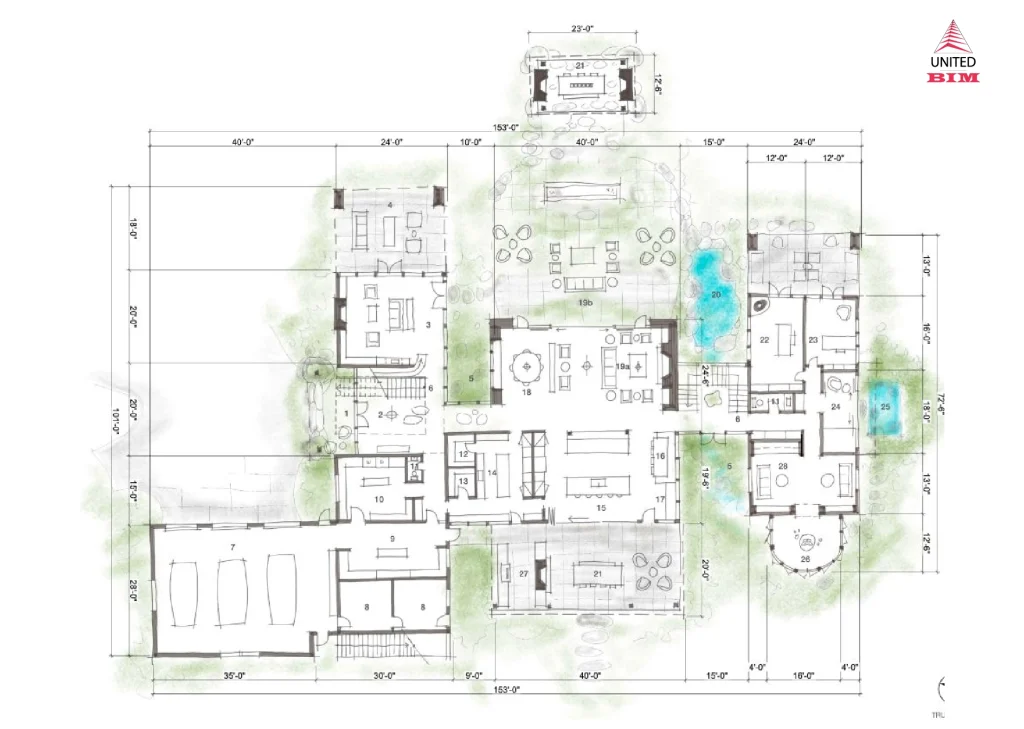
Image source: https://veraiconica.com/
These drawings are not usually detailed enough for construction. Instead, they help the owner and project team understand what the building may look like, how spaces may be arranged, and whether the concept aligns with the project goals.
What are Schematic Design (SD) documents?
SD documents are the drawings, diagrams, narratives, and early project information created during the schematic design phase.
They may include the SD drawings, design narrative, preliminary code review, early cost estimate, area summary, and basic material or system ideas.
The purpose of SD documents is to support early decision-making. Once the owner approves the schematic design, the project usually moves into the DD phase.
What Is Design Development (DD)?
Design Development, or DD, is the phase where the approved schematic design is developed into a more detailed and coordinated design.
If Schematic Design is about selecting the direction, Design Development is about making that direction more realistic.
In this phase, the design team begins to define architectural elements, structural systems, MEP systems, dimensions, materials, and technical requirements in more detail. AIA describes DD as the phase that takes schematic design one step further and lays out mechanical, electrical, plumbing, structural, and architectural details.
What are DD drawings?
DD drawings are design development drawings that show a more complete and detailed version of the project..
They usually include more dimensions, clearer sections, developed elevations, door and window information, material direction, and early coordination between disciplines.
Design Development drawings may include:
- Developed floor plans
- Refined site plan
- Building sections
- Exterior elevations
- Interior elevations where required
- Door and window information
- Wall types or early partition details
- Structural layout information
- Mechanical, electrical, and plumbing layouts
- Outline specifications
- Material selections
- Updated cost estimate support
The DD stage is important because it connects the early design idea with the technical requirements needed to make that idea buildable.
What is a DD set?
A Design Development set is the collection of design development drawings and documents issued at the end of the DD phase.
A DD set is more detailed than an Schematic Desing set, but it is usually not as complete as a Construction Document set. It helps owners, consultants, and sometimes cost estimators review the design before the project moves into final construction documentation.
The DD set may be used for design review, pricing updates, owner approval, consultant coordination, and early constructability discussions.
What Are Construction Documents (CD)?
Construction Documents, or CD, are the detailed drawings and specifications prepared for pricing, permitting, bidding, and construction.
This is the stage where the design is documented with enough detail for contractors and authorities having jurisdiction to understand the work.
AIA explains that once the owner and architect are satisfied with the design development documents, the architect moves forward with construction documents. These drawings typically include specifications for construction details and materials, and the CD set provides information required for contractors to price and build the project.
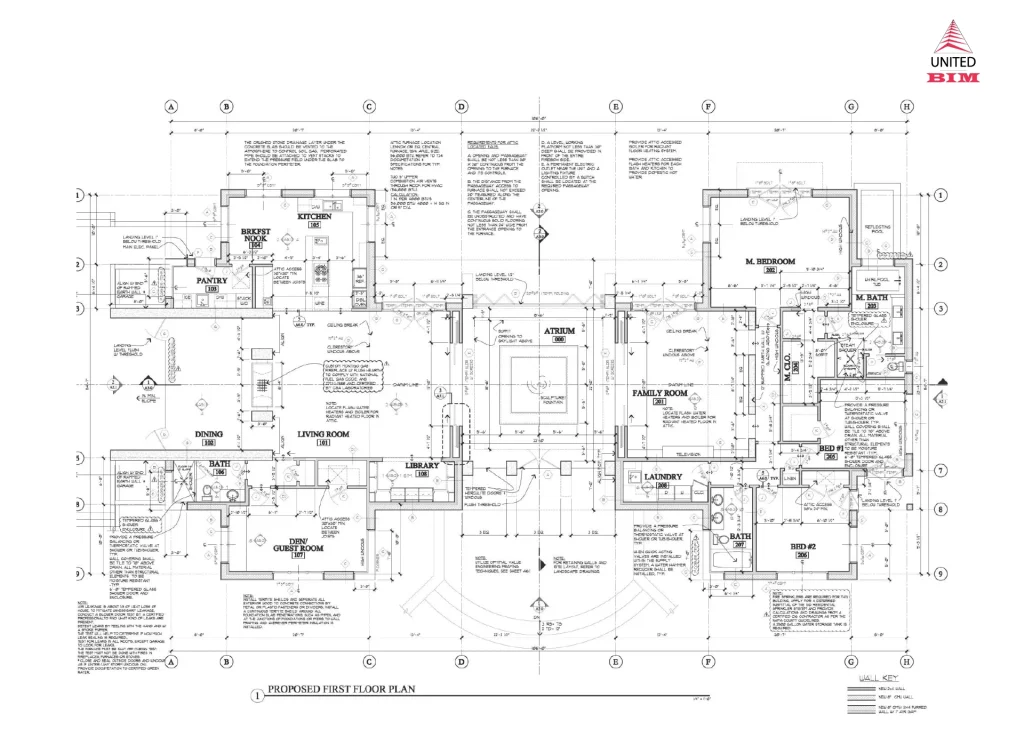
Image source: https://www.wagstaffrogersarch.com/
What are Construction Document (CD) drawings?
CD drawings are the final construction drawings prepared as part of the construction document phase. The final, highly detailed set of blueprints used by builders to price, permit, and construct a building.
A complete CD set typically includes
- Architectural Drawings
- Site plans
- Floor plans
- Exterior Elevations
- Building sections
- Detailed drawings
- Schedules
- Engineering Drawings
- Structural drawings
- MEP (mechanical, electrical and plumbing) drawings
- General & supplement documents
- Cover sheet & code summary
- Specifications (specs)
CD drawings are much more detailed than SD or DD drawings. They are meant to communicate how the project should be built, not just what the design idea looks like.
What is a Construction Document set?
A CD set is the complete set of construction documents issued for permit, bidding, pricing, or construction.
Depending on the project stage, you may hear terms like:
- Permit set
- Bid set
- Construction set
- Issued for Construction, IFC set
- 50% CD set
- 90% CD set
- 100% CD set
A 100% CD set usually means the construction documents are considered complete for their intended use. However, the exact meaning can vary depending on the contract, project type, and submission requirement.
Where SD, DD, and CD Fit in the Construction Process
SD, DD, and CD are part of the larger design and construction process. A typical project may move through these stages:
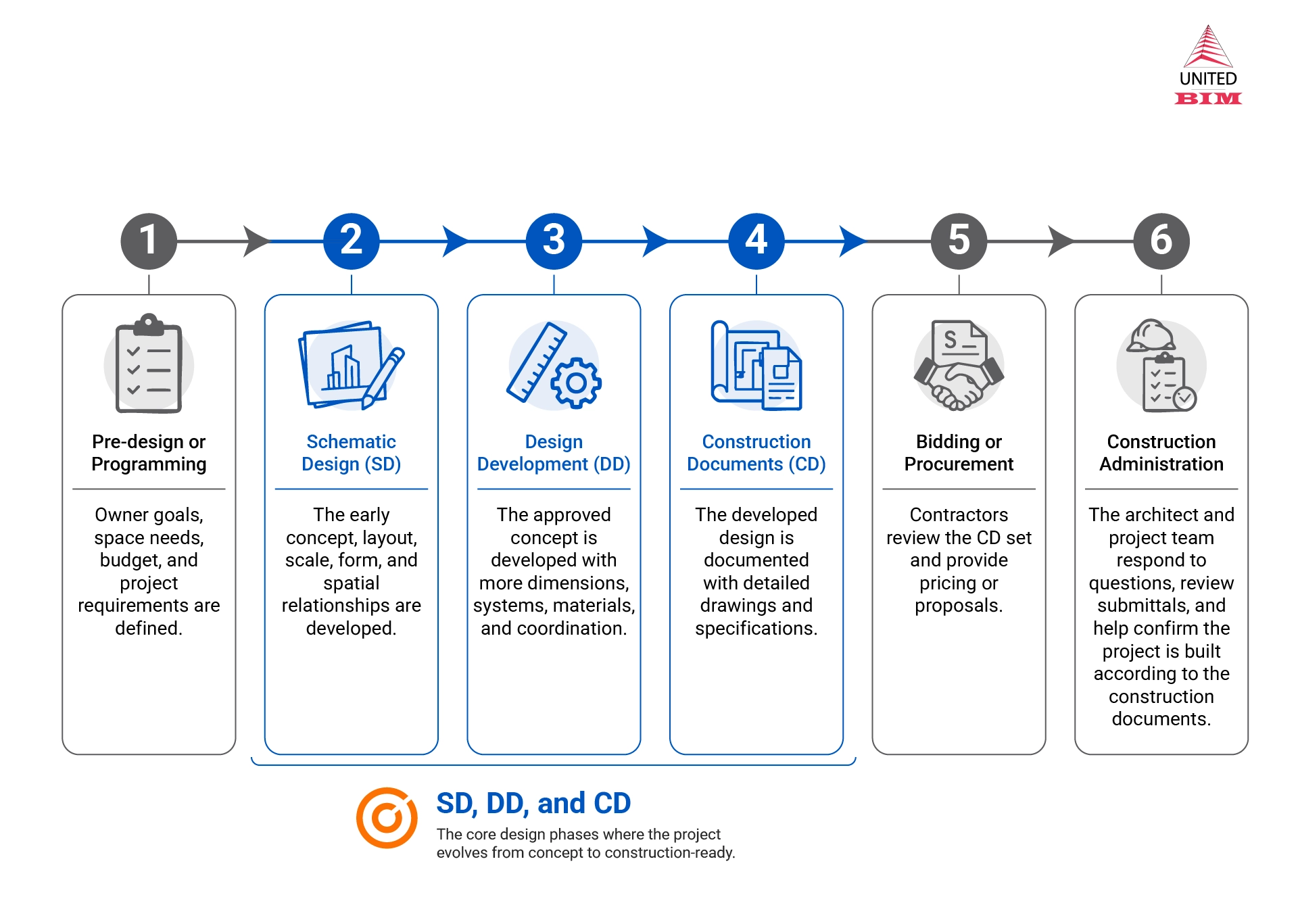
Pre-design or programming
The owner’s goals, space needs, budget, and basic project requirements are defined.
Schematic Design, SD
The design team develops the early concept, layout, scale, form, and spatial relationships.
Design Development, DD
The approved concept is developed with more dimensions, systems, materials, and coordination.
Construction Documents, CD
The approved concept is developed with more dimensions, systems, materials, and coordination.
Bidding or procurement
Contractors review the CD set and provide pricing or proposals.
Construction administration
The architect and project team respond to questions, review submittals, and help confirm the project is built according to the construction documents.
The exact process can change based on the project delivery method, contract, owner requirements, and project type. But SD, DD, and CD remain common terms used to describe how design documentation matures.
How BIM Supports SD, DD, and CD Drawings
Building Information Modeling can support each stage of SD, DD, and CD by helping the project team develop drawings from a coordinated digital model.
In the Schematic Design phase, BIM may be used for early massing, space planning, area studies, and design visualization.
In the Design Documentation phase, BIM can help develop architectural, structural, and MEP systems in a more coordinated way. This is where the model starts carrying more useful information about building elements, systems, materials, and spatial relationships.
In the Construction Document phase, BIM can support the production of coordinated plans, sections, elevations, schedules, and details from the model. Since drawings are generated from the model environment, updates can be managed with better consistency across views when the model is properly maintained.
BIM does not remove the need for design judgment, documentation standards, or technical review. But it can make the transition from SD to DD to CD more structured and easier to manage.
In Summary
SD, DD, and CD are three important design stages in construction.
- SD, or Schematic Design, defines the early concept – It helps the owner and project team understand the basic layout, form, scale, and design direction.
- DD, or Design Development, develops the approved concept – It adds more technical detail, dimensions, materials, systems, and coordination.
- CD, or Construction Documents, prepares the final drawing set – It includes the detailed drawings and specifications needed for pricing, permits, bidding, and construction.
A simple way to remember the difference is:
SD shows the idea | DD develops the idea | CD documents the idea for construction
FAQs SD, DD & CD in Construction
SD means Schematic Design. It is the early design phase where the architect develops the project concept, layout, scale, form, and spatial relationships.
DD means Design Development. It is the phase where the approved schematic design is developed with more technical detail, including dimensions, materials, systems, and coordination.
CD means Construction Documents. It refers to the detailed drawings and specifications prepared for pricing, permitting, bidding, and construction.
SD drawings are schematic design drawings. They usually include early floor plans, site plans, elevations, sections, massing views, and other concept-level materials.
DD drawings are design development drawings. They are more detailed than SD drawings and usually include developed plans, sections, elevations, material information, system layouts, and dimensions.
CD drawings are construction document drawings. They include detailed construction information such as plans, sections, elevations, schedules, details, notes, and specifications.
DD drawings show the developed design, while CD drawings show the detailed construction documentation. DD is used for design refinement and coordination. CD is used for pricing, permitting, bidding, and construction.
A CD set is the complete construction document set. It includes drawings and specifications used by contractors, consultants, and authorities for pricing, permitting, bidding, and construction.
A DD set is the design development drawing and document package. It is issued after schematic design and before construction documents.
SD comes first, then DD, then CD. The usual sequence is Schematic Design → Design Development → Construction Documents.
Yes. BIM can be used across SD, DD, and CD phases. In SD, it can support early massing and space planning. In DD, it can support coordination and system development. In CD, it can support detailed drawing production and documentation.
No. Construction documents are usually prepared by the design team to communicate the design and construction requirements. Shop drawings are typically prepared by contractors, fabricators, suppliers, or subcontractors to show how specific components will be fabricated, assembled, or installed.
About the Author

Coordination Manager / VDC Manager at United BIM
With over 10 years of experience in the AEC industry, Akash Patel is a seasoned Coordination Manager and VDC Manager at United BIM. His expertise lies in managing complex MEP-FP coordination projects and leveraging cutting-edge BIM technology to ensure seamless collaboration and precision. Akash is dedicated to delivering high-quality, detailed models that meet the demands of modern construction. He is passionate about optimizing workflows and driving innovation within the BIM field.