MEP During Design-build and Design-bid-build Project Delivery Method
MEP coordination is handled very differently depending on the project delivery method. The approach followed in Design-Build is not the same as Design-Bid-Build, especially when it comes to coordination and model development.
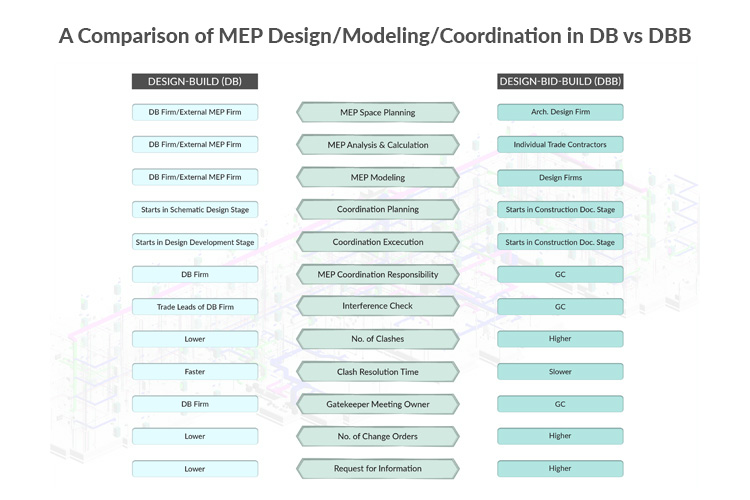
This infographic presents a clear comparison of how MEP design, modeling, and coordination work in both delivery methods.
It highlights:
- Differences between Design-Build and Design-Bid-Build workflows
- How MEP coordination is managed in each approach
- Impact on clash detection, coordination, and execution
- How coordination efficiency varies across project types
This is useful for:
- BIM coordinators and MEP teams
- Contractors and project managers
- Professionals evaluating project delivery methods
It helps teams understand how coordination strategy changes based on the project approach, leading to better planning and fewer conflicts.
Explore More BIM Resources
Frequently Asked Questions
Design-Build is a project delivery method where design and construction are handled by a single entity. This allows better collaboration and faster coordination between teams.
Design-Bid-Build is a traditional method where design and construction are handled separately. The design is completed first, followed by bidding and construction.
In Design-Build, coordination happens earlier and is more integrated. In Design-Bid-Build, coordination often happens later, which can lead to more conflicts and revisions.
Because teams work together from the beginning, allowing early clash detection and better alignment between design and construction.
Since teams work separately, coordination may be delayed. This can lead to design conflicts, rework, and coordination issues during construction.
BIM coordinators, contractors, project managers, and teams involved in MEP coordination and project planning can benefit from this infographic.
It affects how and when models are created, coordinated, and used. Design-Build allows more integrated BIM workflows compared to Design-Bid-Build.
BIM supports early coordination, improves collaboration, and helps reduce clashes during design and construction.
Yes, BIM can still improve coordination, but its benefits may be limited if teams are not integrated early.
Understanding delivery methods helps teams choose the right coordination strategy and avoid common project issues.