Downlaod Clash Detection Infographic
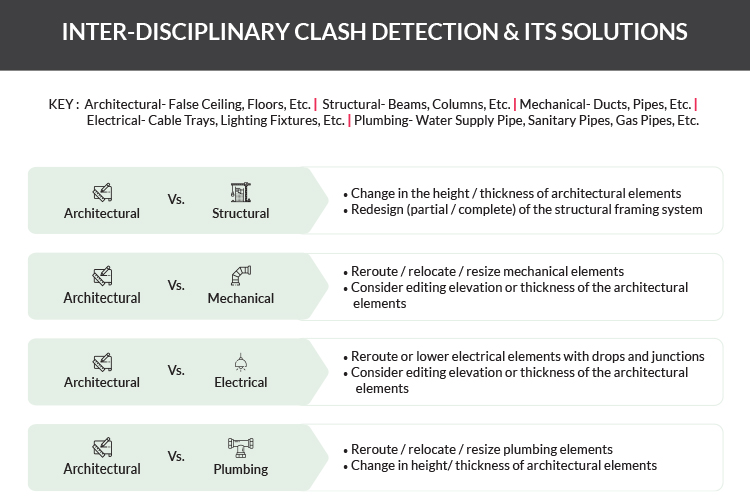
Infographic – Interdisciplinary Clash Detection and Its Solutions
Clash detection is a critical part of BIM coordination, but identifying clashes is only one part of the process. Resolving them effectively is what impacts project outcomes.
This infographic presents a clear 3-step BIM workflow for structural engineers, connecting design, modeling, and fabrication in a structured process.
It highlights:
- Frequent clash scenarios between disciplines
- Typical coordination issues during design and construction
- Suggested solutions to resolve clashes effectively
This is useful for:
- BIM coordinators and project teams
- General contractors and construction management firms
- Design teams involved in coordination
It helps teams move beyond detection and focus on resolving clashes in a structured way during both pre-construction and construction stages.
Explore More BIM Resources
Frequently Asked Questions
Clash detection is the process of identifying conflicts between different building systems in a BIM model. It helps ensure that elements from different disciplines do not interfere with each other.
Interdisciplinary clashes occur when elements from different disciplines such as architectural, structural, and MEP systems conflict within a model.
It helps identify issues early in the design stage, reducing errors, rework, and delays during construction.
Common clashes include conflicts between ducts and beams, pipes and walls, or equipment overlapping with structural elements.
Clashes are resolved through coordination meetings, model adjustments, and collaboration between different disciplines.
BIM coordinators, VDC teams, and project stakeholders are typically responsible for managing clash detection and resolution.
It is performed during design coordination and continues into construction to ensure systems remain aligned.
Tools like Navisworks and other BIM platforms are commonly used to detect and manage clashes.
Detection only identifies the problem, while resolution ensures that the issue is fixed and does not impact construction.
An infographic simplifies complex coordination issues and solutions, making them easier to understand and apply in real projects.