Free Downloadable Infographics
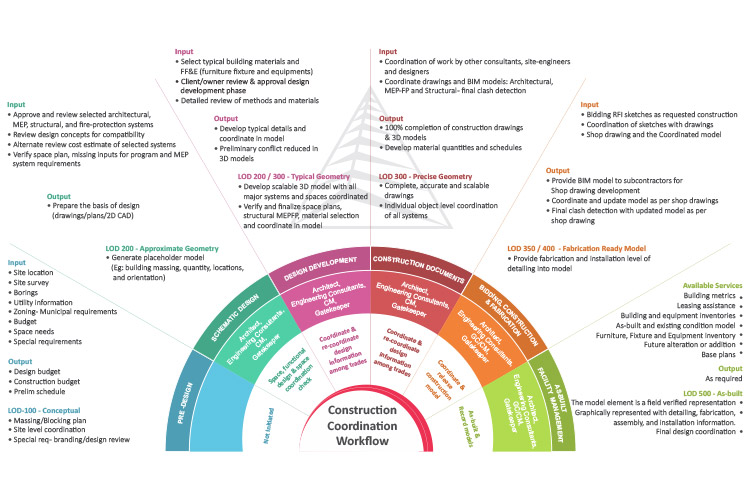
MEP Coordination Workflow Infographic with BIM Process, LOD and Drawings
MEP coordination is not just about clash detection. It follows a structured workflow that connects design, coordination drawings, and construction stages.
This infographic gives a clear visual understanding of how MEP coordination evolves across the project lifecycle.
It highlights:
- MEP coordination workflow across project stages
- How coordination drawings are developed and used
- Role of BIM and LOD at each stage
- Inputs and outputs involved in coordination
This is useful for:
- BIM coordinators and MEP teams
- Professionals working on coordination drawings
- Project teams managing multi-discipline coordination
It helps you understand how coordination, drawings, and BIM workflows are connected in real projects.
Explore More BIM Resources
Frequently Asked Questions
An MEP coordination workflow defines how mechanical, electrical, and plumbing systems are coordinated from design to construction. It ensures all systems align and conflicts are resolved before execution.
MEP coordination drawings are detailed drawings that show how different building systems fit together. They are developed after coordination to guide construction and installation.
BIM allows teams to create and combine models from different disciplines. It helps detect clashes, manage coordination workflows, and improve accuracy before construction begins.
LOD defines the level of detail in BIM models at each stage. It ensures that coordination is done with the right amount of information as the project progresses.
The process involves model creation, clash detection, coordination meetings, issue resolution, and preparation of coordination drawings for execution.
It usually starts during design development and continues through construction. The level of coordination increases as the project progresses.
Inputs include design models and drawings from different disciplines. Outputs include coordinated models, clash reports, and finalized coordination drawings.
3D MEP coordination involves using BIM models to coordinate systems digitally. It helps visualize conflicts and resolve them before construction begins.
They help standardize how coordination is done, reduce errors, and improve communication between different project teams.
By identifying and resolving clashes early, coordination prevents on-site conflicts, reduces rework, and improves project efficiency.